Brook, Bridges & Flow: Safekeeping
Mpi, Tayaxkun, Pèmëpehële: Kenahkihaok
about
Brook, Bridges & Flow: Safekeeping (Mpi, Tayaxkun, Pèmëpehële: Kenahkihaok) is a public art installation that explores the hidden flow of Tibbetts Brook beneath the city and the role of community in protecting what sustains life. Installed along a bridge, the work transforms the structure into a site of preservation, where water, memory, culture, and ecology are held in collective care.
Drawing from the idea of safekeeping what we store, protect, and pass forward, each image acts as a visual archive, inviting viewers to reflect on their relationship to water, history, and the environment.
This body of work weaves together past, present, and future through a layered visual language rooted in Tibbetts Brook and its surrounding communities. Archival photographs serve as windows into the past, revealing the histories of the land, the waterway, and the people who once engaged with it openly. In the present, newly captured images along the brook document its current condition both visible and hidden, grounding the work in lived reality and ongoing environmental change. These temporal layers are physically brought together through the use of recycled materials, plastic bags, found objects, and discarded elements transformed into textured multimedia collages. These materials, once part of everyday consumption, are reimagined as vessels of memory and care, pointing toward a future where preservation, sustainability, and community responsibility shape how we relate to our environment.
The use of Algonquin words throughout this project grounds the work in a deeper acknowledgment of the land’s original language and knowledge systems, creating a bridge between past, present, and future. Each word kenahkinkòma (keep), kenahkitu (care), kwëtki (return), mpi (water), chëpìka (roots), pèmëpehële (flow), tayaxkun (bridge), këmëshalhùmëna (remember), kenahkihaok (protect), and nkënëmën (hold) acts as both a translation and a continuation of cultural memory, reconnecting the visible landscape to its Indigenous history. By pairing these words with contemporary imagery and materials, the project creates a fusion of time, where ancestral language informs present understanding and future responsibility. This integration honors the enduring presence of Algonquin culture while inviting viewers to reflect on how language, land, and community remain interconnected across generations.
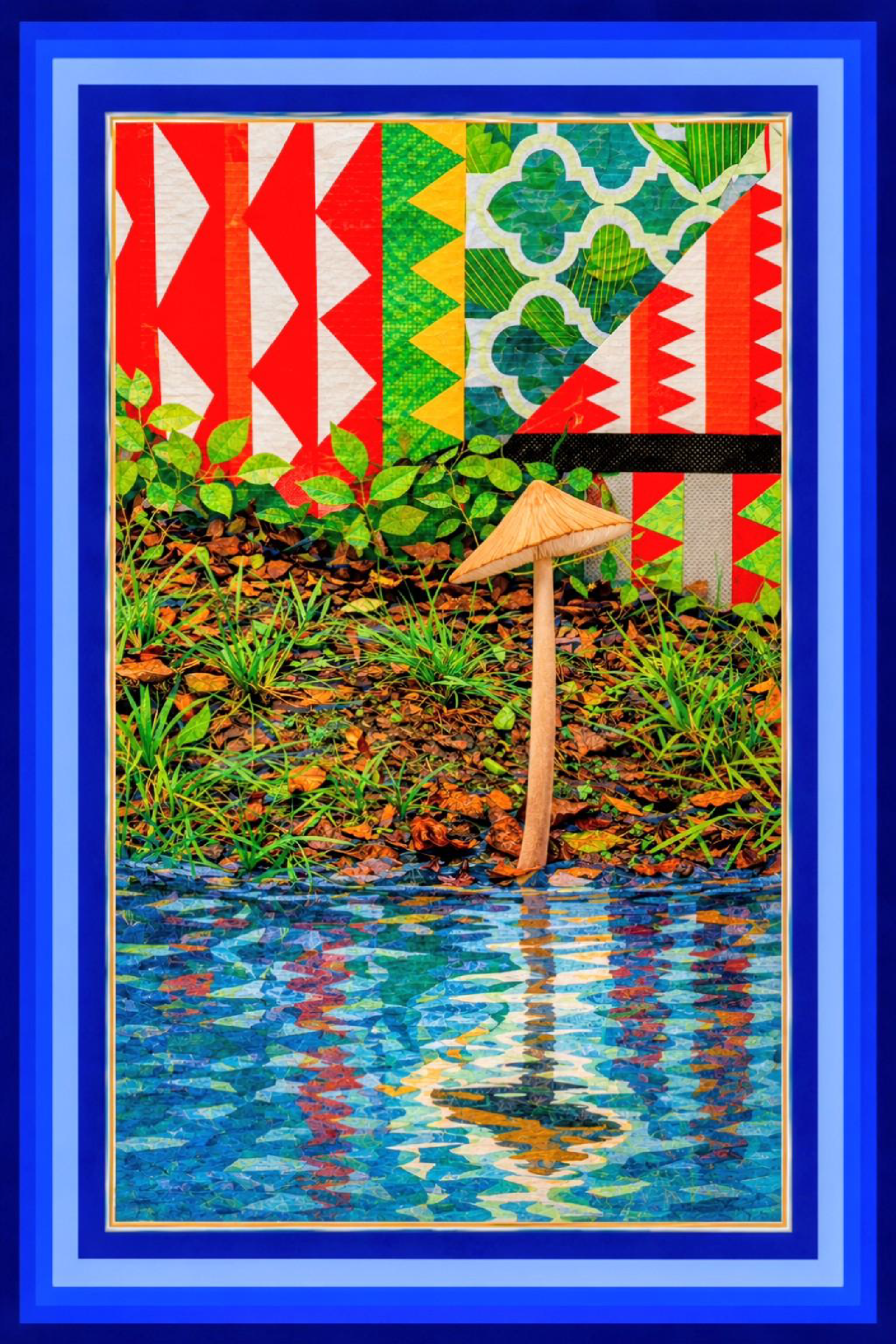
KEEP(kenahkinkòma)
(keh-nah-kin-KOH-mah)
This artwork explores the idea of keeping life, memory, and resilience through the image of a mushroom growing steadily within its environment. Surviving and thriving under the sun, the mushroom becomes a symbol of quiet strength and natural persistence. The composition is built through cut shapes and layered designs inspired by patchwork and the visual language of wampum belts, reinterpreting traditions of storytelling through color, pattern, and form. Together, these elements reflect how we preserve knowledge, culture, and connection to the land, reminding us that even the smallest forms of life carry stories worth keeping.
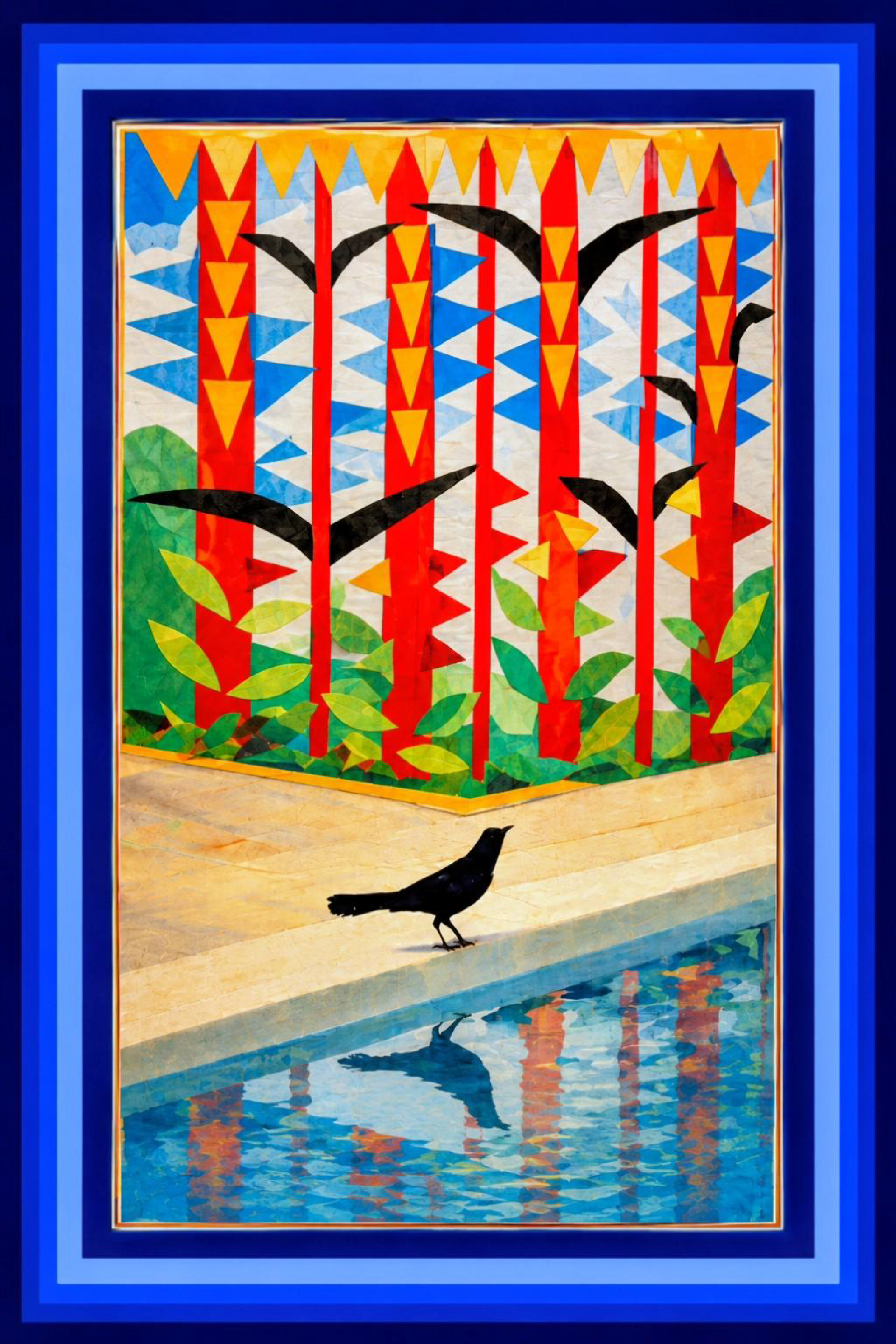
RETURN (kwëtki)
(KWET-kee)
This artwork reflects the idea of return through the image of a blackbird gazing into its reflection in the water, symbolizing self-awareness, memory, and reconnection. The mirrored water becomes a space of both past and present, where identity and place meet. In the background, birds move through the sky, returning to the land, representing cycles of migration, community, and collective belonging. Together, these elements speak to the importance of returning not only to physical spaces like the brook, but to one another, to shared histories, and to the natural rhythms that sustain life.
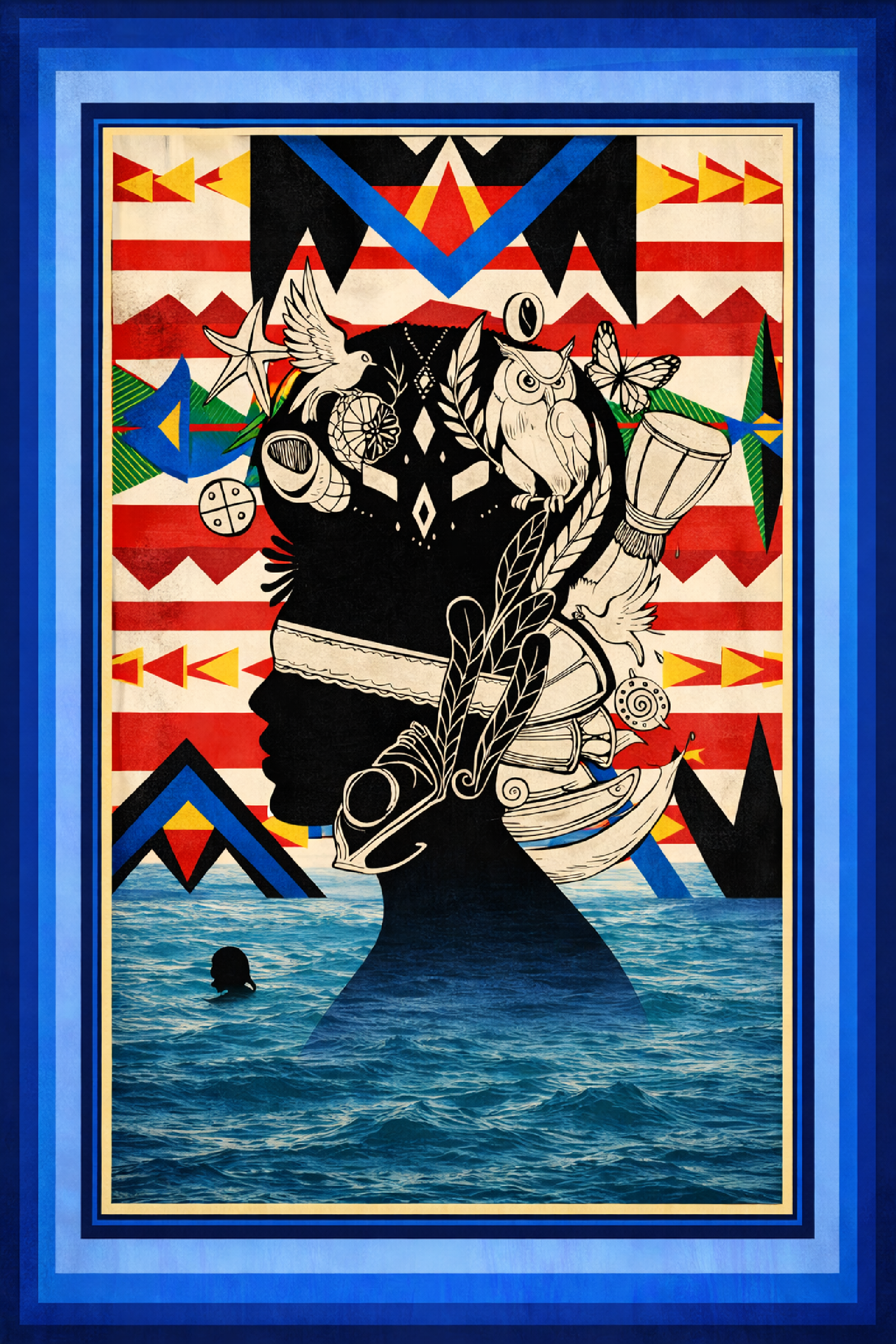
Water (mpi)
(m-PEE)
This artwork centers water as a source of life, memory, and connection. Water becomes a reflective surface that holds stories of the land, the people, and the ecosystems it supports. Through layered textures and fluid forms, the image captures water as both visible and hidden flowing above and beneath the city. Water is not only a resource, but a living archive, carrying histories forward while sustaining present life. It reminds us of our responsibility to protect and respect it, recognizing that our future is directly tied to the health and movement of water.
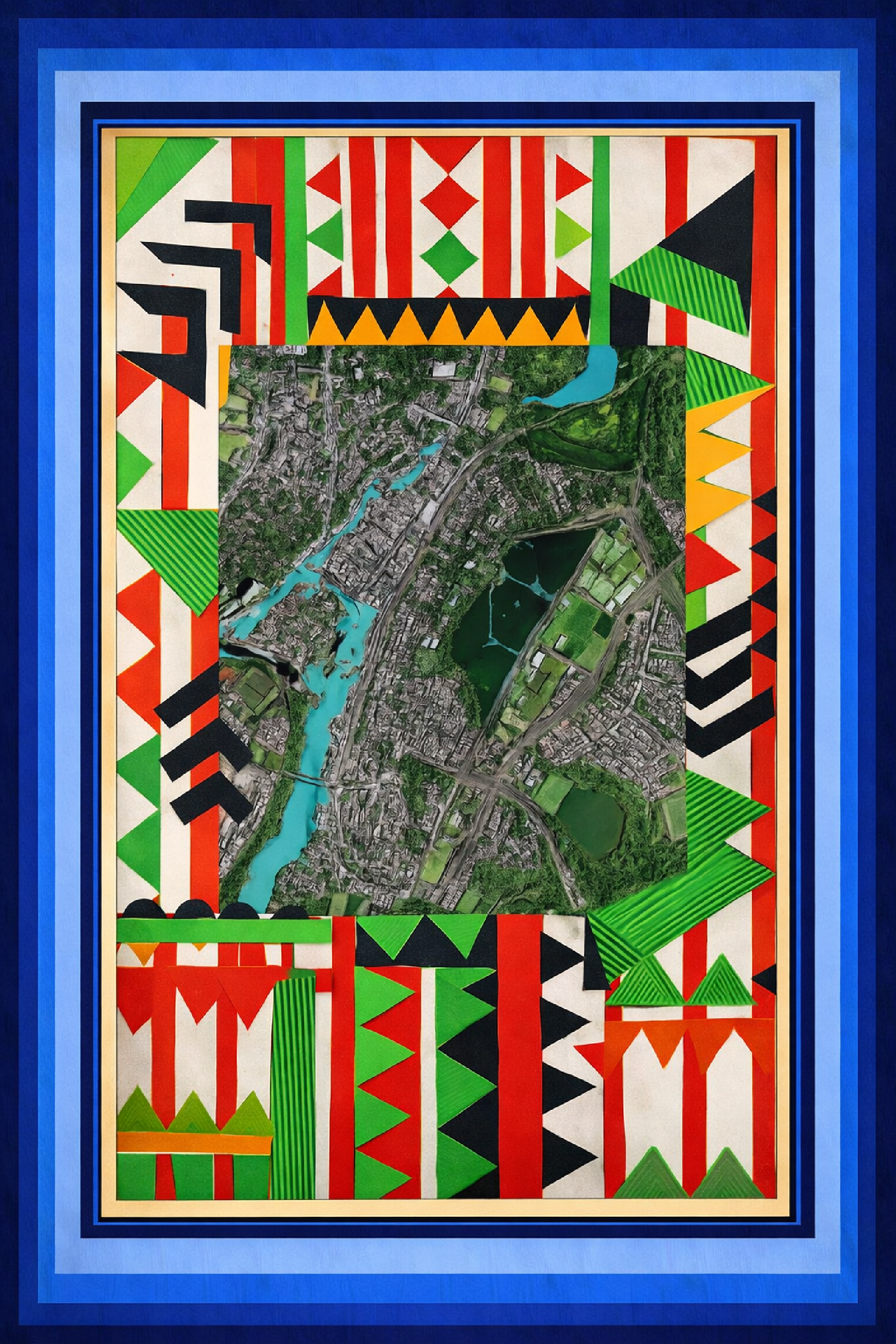
Roots (chëpìka)
(cheh-PEE-kah)
This artwork reflects the unseen networks that sustain life beneath the surface. Inspired by roots, the composition explores connection to land, ancestry, and place intertwining natural systems with cultural memory. Just as roots anchor and nourish growth, they also hold stories passed through generations, often hidden but deeply felt. Through layered patterns and organic forms, the work speaks to grounding, belonging, and the importance of staying connected to where we come from. It reminds us that what lies below like the brook itself is essential to what continues to grow above.
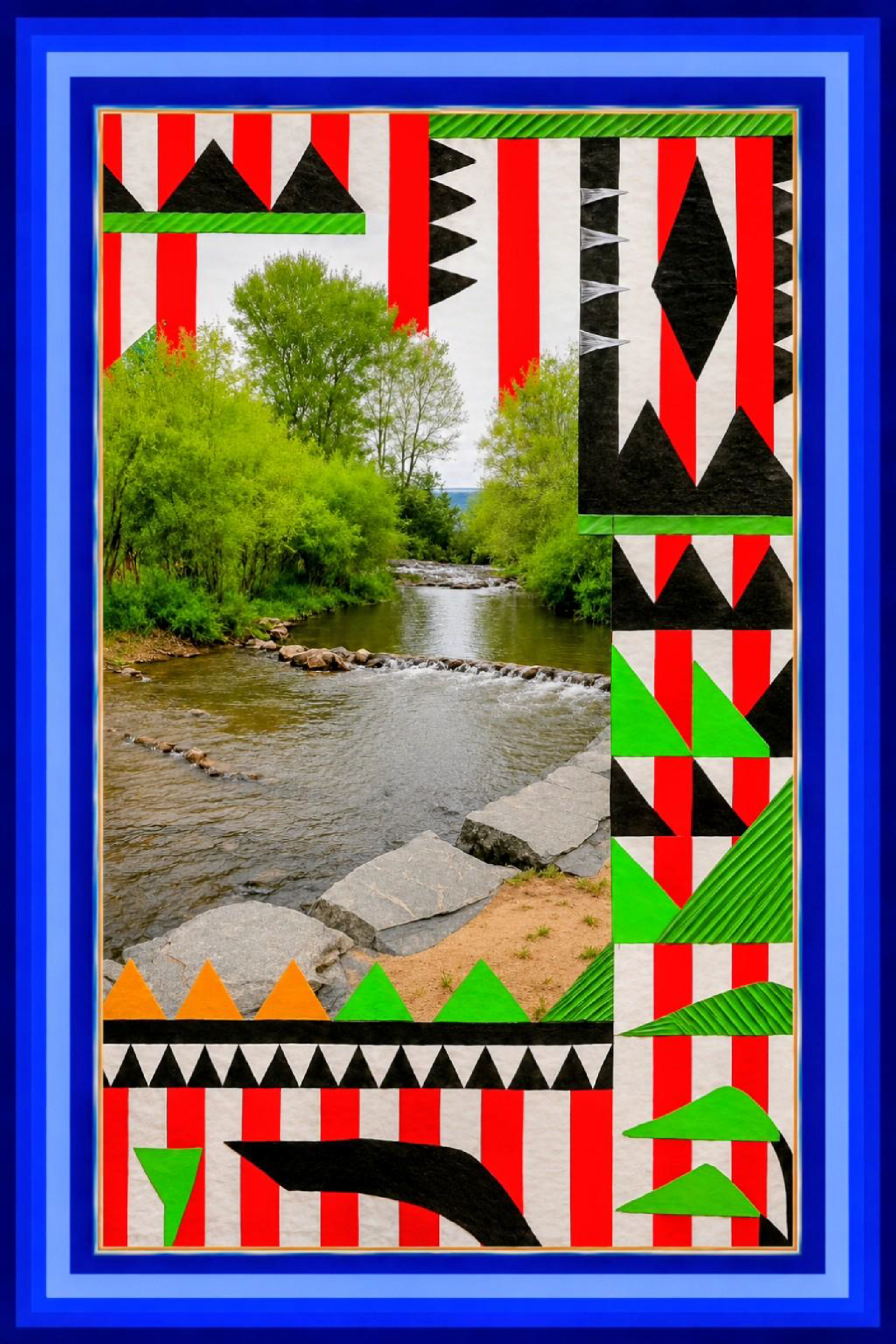
Flow (pèmëpehële)
(peh-meh-peh-HEH-leh)
This artwork embodies the movement of water as both a physical force and a carrier of memory. The flowing brook becomes a pathway that connects past, present, and future, guiding the viewer through a living system beneath the surface. The layered, organic forms and luminous currents suggest energy, circulation, and continuity reminding us that water is always in motion, shaping the land and sustaining life. Flow represents not only the movement of water, but the movement of stories, communities, and time itself, encouraging us to remain connected, adaptable, and in rhythm with the natural world.
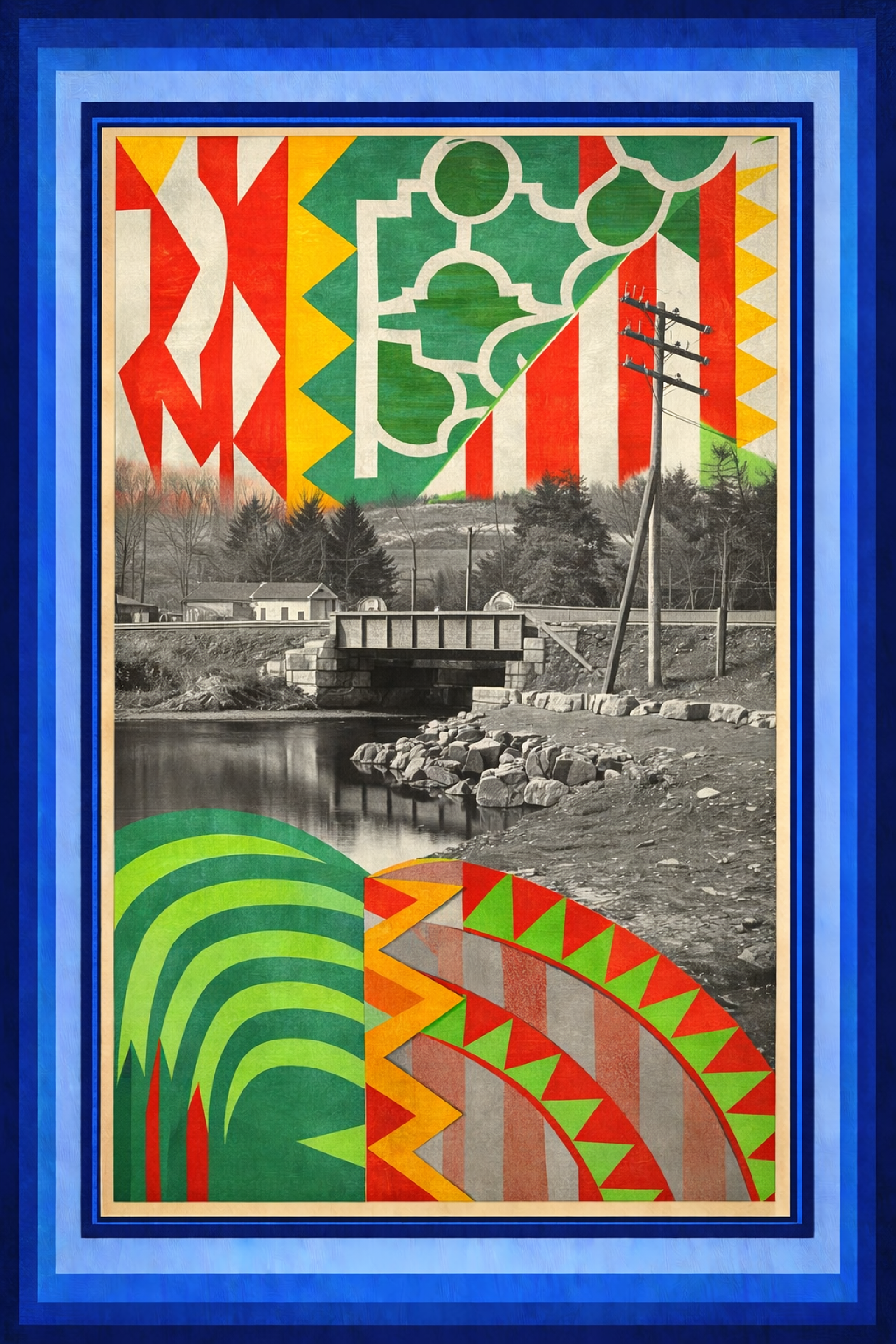
Bridge (tayaxkun)
(tah-YAHK-koon)
This artwork explores the bridge as both a physical structure and a symbol of connection. Positioned above the hidden flow of the brook, the bridge becomes a space where histories, communities, and environments meet. It represents the crossing between past and present, seen and unseen, reminding us that even when water is buried, its presence continues beneath us. Through layered forms and structural patterns, the image reflects how bridges hold movement, carry stories, and create pathways for people to come together. It invites us to consider how we connect with the land, with each other, and with the histories that exist below our feet.
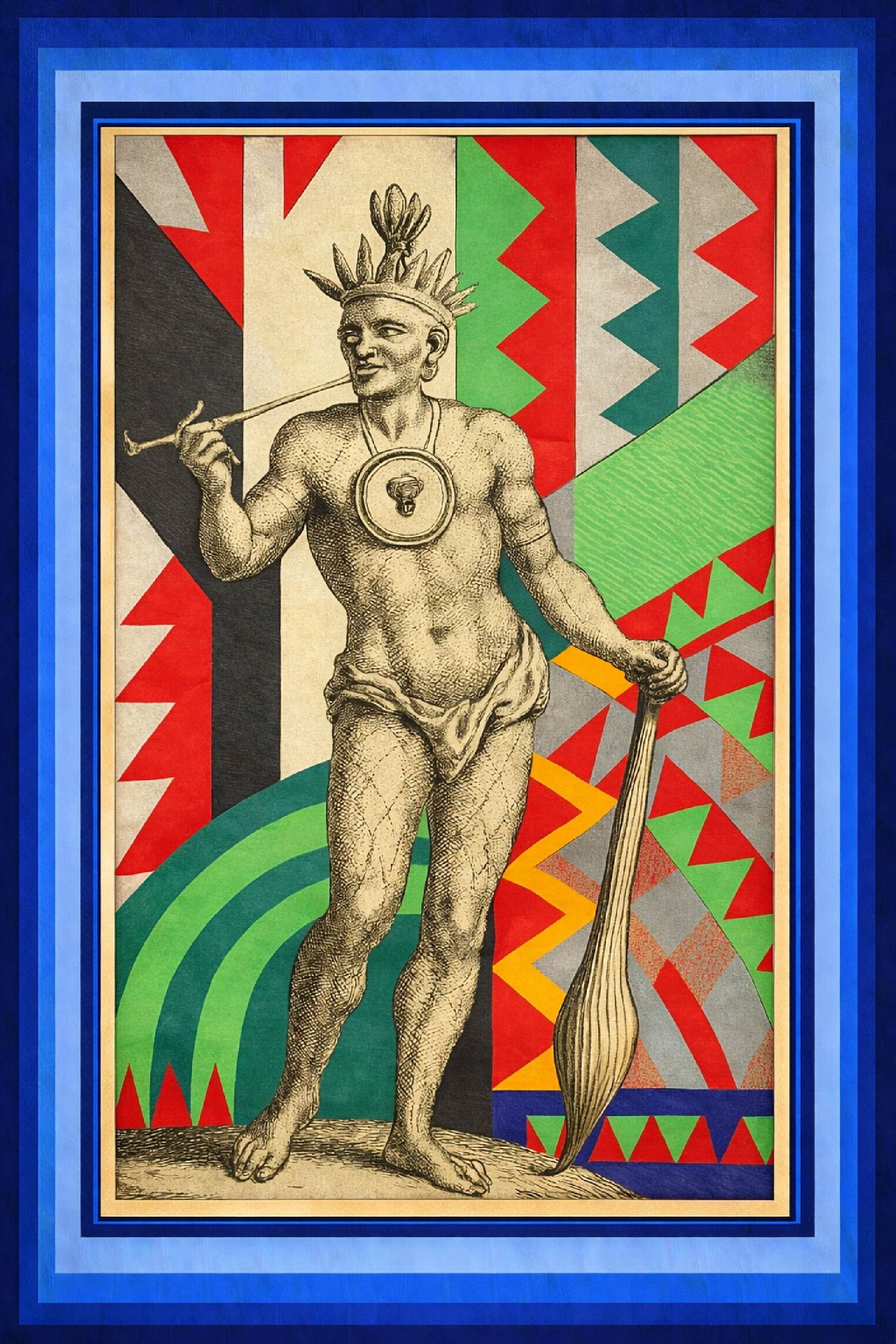
Remember (këmëshalhùmëna)
(keh-meh-shah-LOO-meh-nah)
This artwork centers Algonquin Indigenous memory as something living and carried through both land and water. Through layered imagery and archival references, the piece reflects how histories remain present even when unseen like the brook flowing beneath the surface. Patterns and textures act as visual traces of what has been, honoring stories, cultures, and moments that continue to shape the present. Remembering becomes an act of awareness and responsibility, inviting viewers to reflect on what is held within the landscape and within themselves, and how those memories guide the future.
Care (kenahkitu)
(keh-nah-KEE-too)
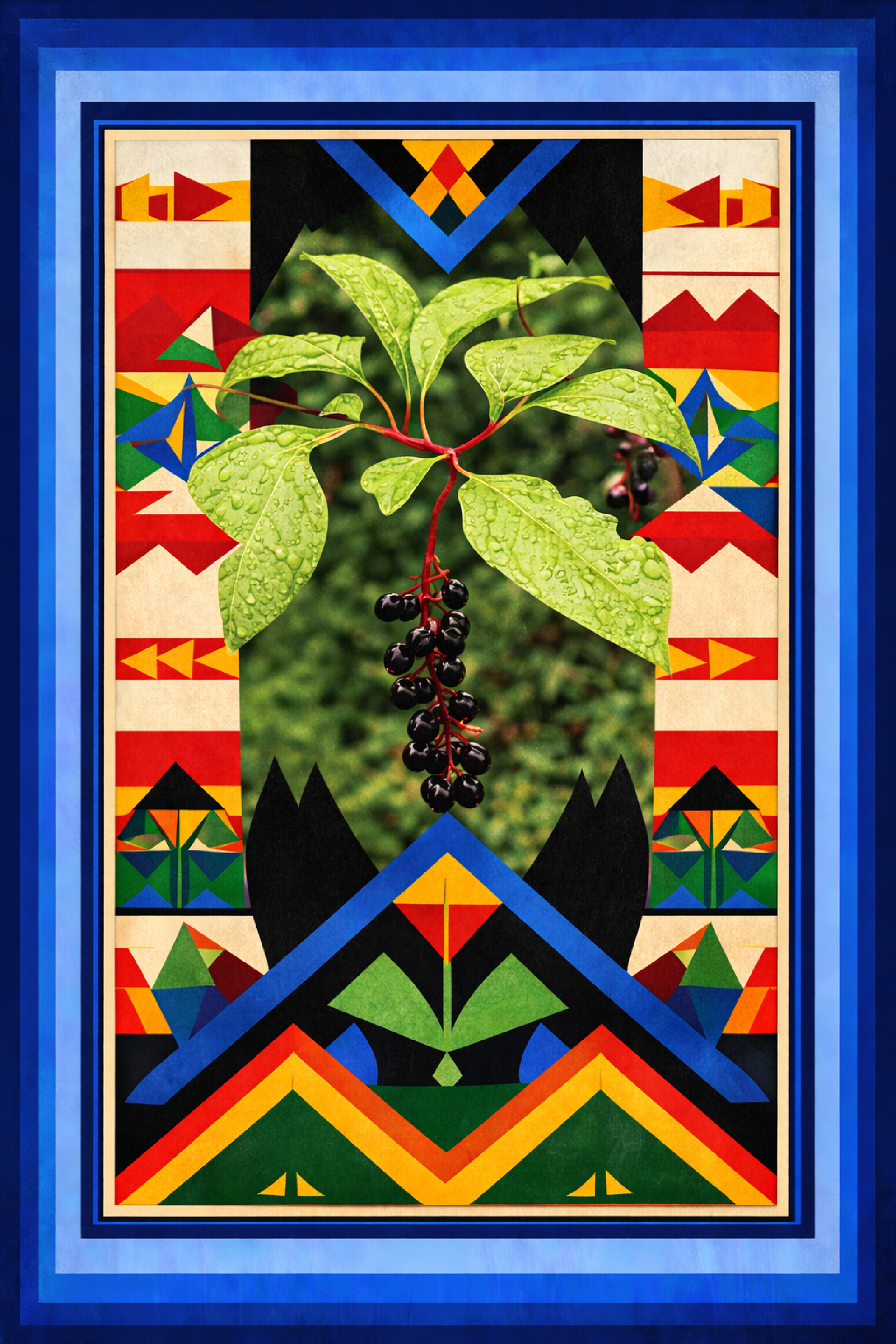
This artwork centers the act of care as a shared responsibility between people, land, and water. Through the image of a blackberry plant as a natural object with Design forms, the work reflects tenderness, protection, and intentional connection to the environment. The gesture becomes symbolic of how we nurture what sustains us whether it is the brook, the soil, or one another. Layered textures and materials within natural systems, reminding us that care is both an action and a commitment. It invites viewers to consider how small acts of attention and respect can lead to collective healing and long-term sustainability.
Reuse
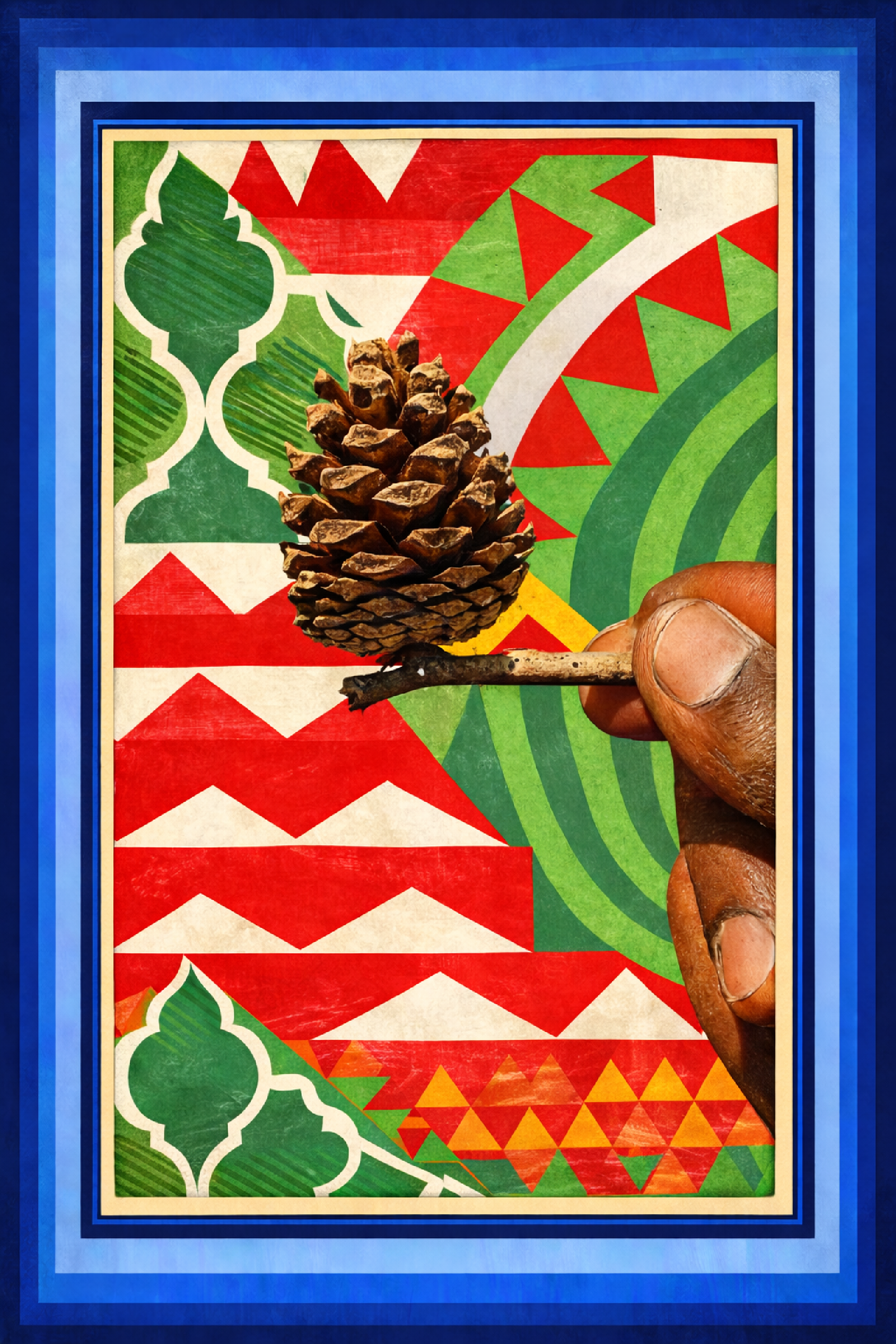
This artwork highlights transformation through the use of recycled and found materials, giving new life to what has been discarded. Layers of plastic, fabric, and everyday objects are reassembled into a visual language that reflects both environmental impact and creative possibility. The composition speaks to cycles of consumption, waste, and renewal encouraging a shift in how we value materials and resources. By reusing what already exists, the work becomes an act of resistance and care, reminding us that sustainability begins with reimagining what we choose to keep, discard, and transform.
Protect (kenahkihaok)
(keh-nah-kee-HAH-ok)
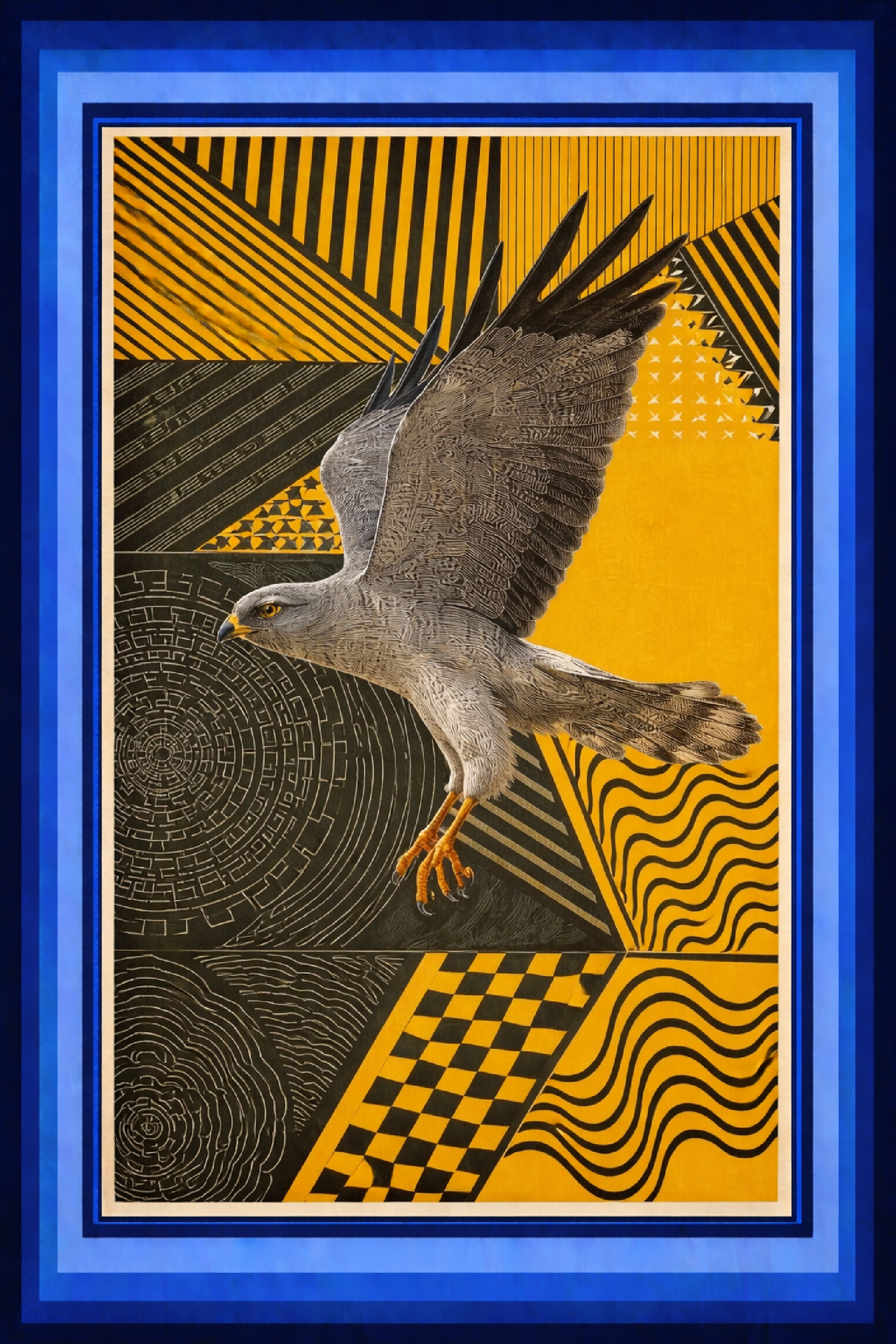
This artwork centers protection as a shared responsibility between people, land, and water. Through layered imagery and natural forms, the piece reflects the fragile balance of ecosystems and the need to safeguard what sustains life. The presence of animals, plants, and flowing water speaks to interconnected systems that rely on care and respect to survive. Protection is not only about preservation, but about active participation defending, nurturing, and restoring the environments and communities we are part of. It invites viewers to consider their role in protecting both visible and hidden spaces, like the brook beneath the bridge, and to recognize that the future depends on what we choose to protect today.
Future
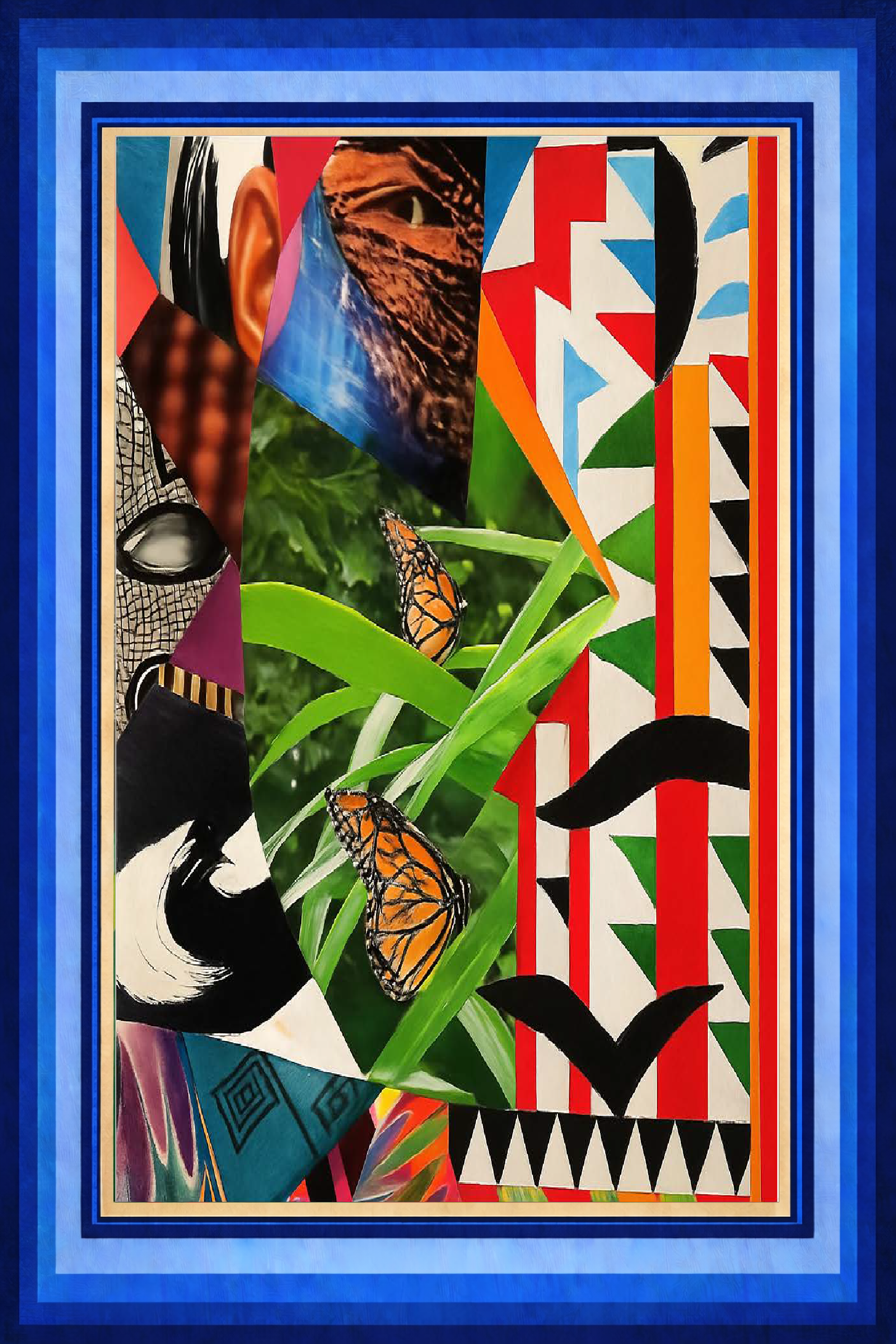
This artwork looks forward, imagining what is possible when we care for the land, water, and each other. Through imagery of movement, light, and open space, it reflects growth, renewal, and the continuation of life beyond the present moment. The future is shaped by what we choose to protect, remember, and restore today. Like the brook returning to the surface, it represents hope, resilience, and transformation. This piece invites viewers to envision a future where community, environment, and culture are in balance flowing together toward something more sustainable and connected.
Hold nkënëmën
(nkeh-neh-men)
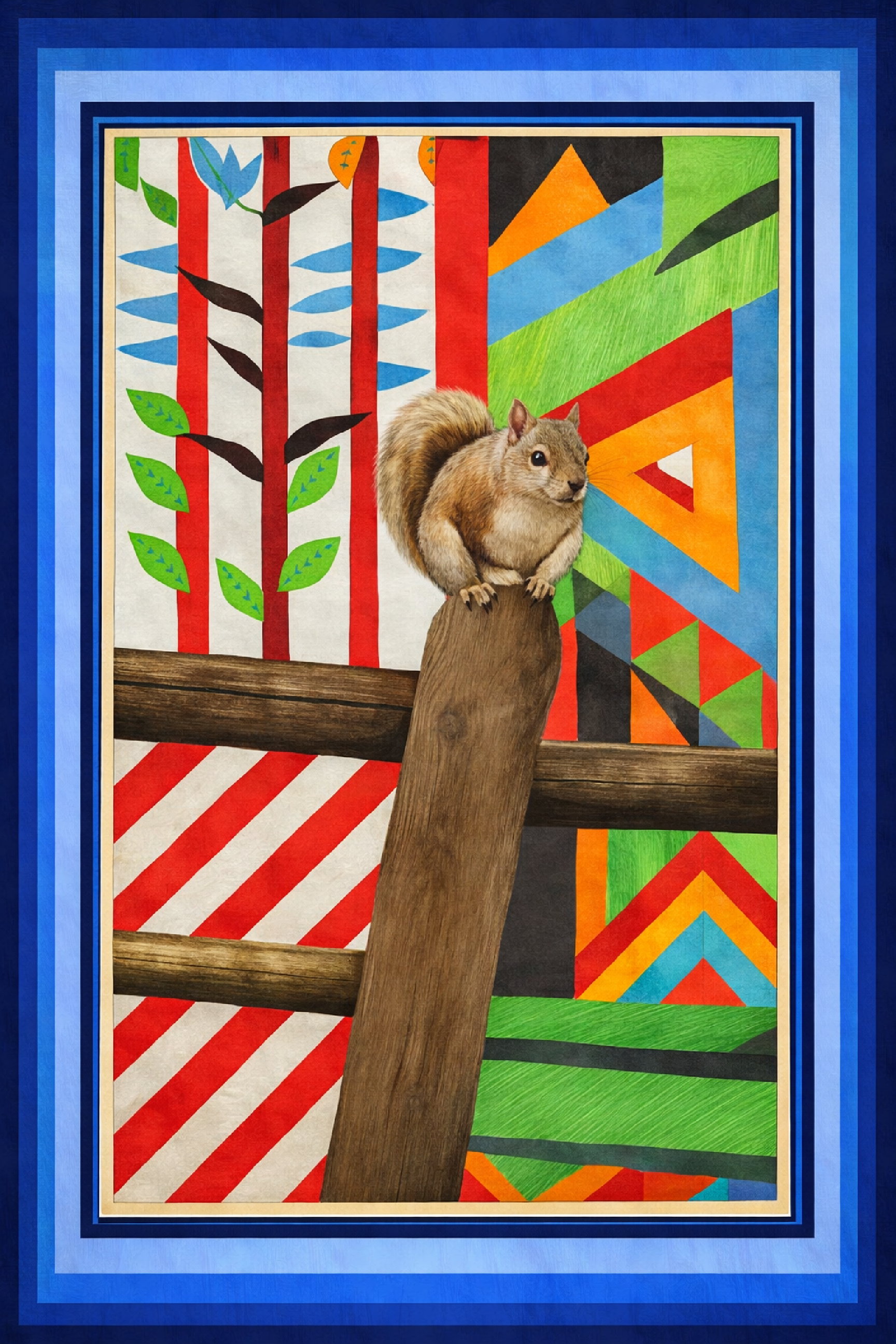
This artwork collage with an Eastern squirrel reflects the act of holding, supporting, carrying, and sustaining what is essential to life. Through layered forms and contained compositions, the image suggests both physical and emotional structures that keep water, memory, and community intact. Like the land that holds the hidden brook beneath the surface, the work speaks to quiet strength and stability. It invites viewers to consider what we choose to hold onto, how we support one another, and how collective care creates the conditions for life to continue and thrive.